In our latest workshops held with participants in our REDD project, the focus was on governance. In practice that means how the community organizes itself, for example in a general project committee. Creating stronger governance has multiple benefits for the people as well as for the project. It is a win-win situation. This can strengthen forest resources, agricultural practices and overall stronger community cohesion. We follow national and international safeguard frameworks like the Cancun safeguards to ensure transparent and fair decision-making with well-managed benefits.
The Cancún safeguards are a set of 7 social, environmental and governance safeguards adopted under UNFCCC for REDD+ activities at Climate COP in Cancún, Mexico. The safeguards address topics including forest governance, the rights and participation of Indigenous peoples and local communities, conservation of natural forests and biodiversity, and risks such as reversals and displacement of emissions.
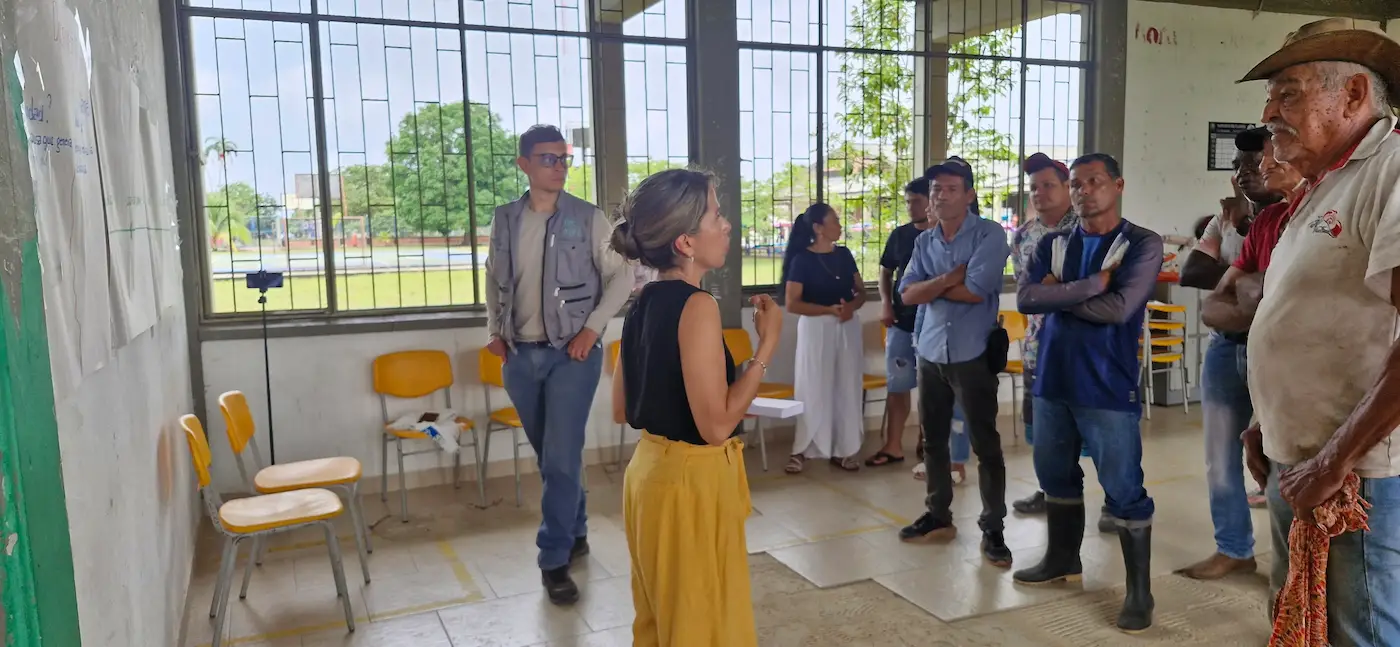
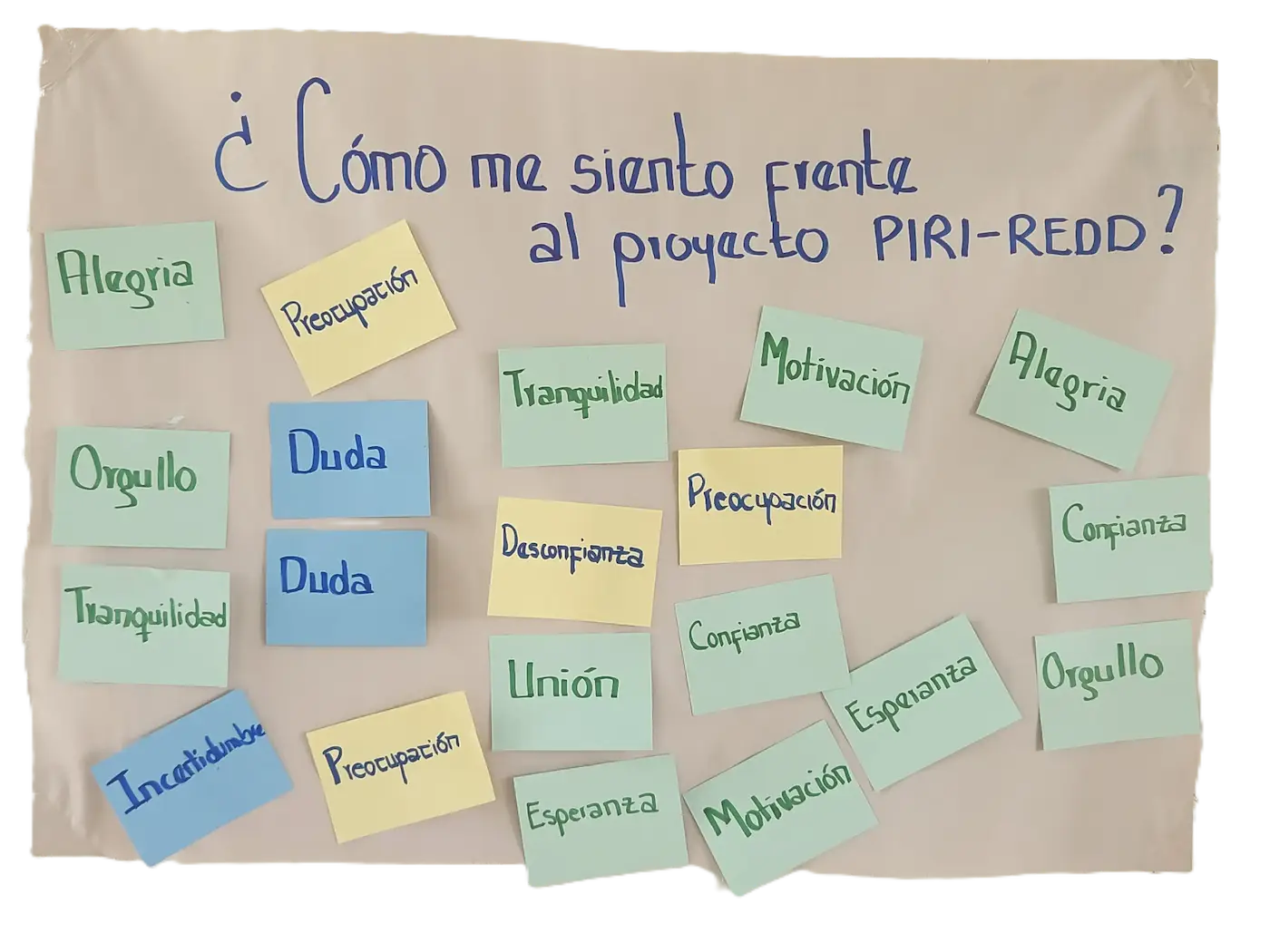
The workshop started with an introductory exercise aimed at discovering how participants were feeling about the project. The goal was to understand confidence, concerns, readiness and collective work. Looking at the picture you can see the overall confidence level and thoughts on the project from the participants. Overall, emotions were predominantly positive with a few signals of uncertainty that were addressed and will be addressed in the future. After this short exercise it was time for the real matter at hand, governance! Kelly established some concepts and definitions first and then went on to explain the exercise the community would be doing to explore potential roles and leaders between the participants.
Participant feedback
The workshop started with an introductory exercise to understand how participants felt about the PIRI-REDD project. The goal was to identify levels of confidence, concerns, readiness, and willingness to work collectively.
Overall, emotions were predominantly positive with a few signals of uncertainty that were addressed and will be addressed in the future.
After this short exercise, it was time for the main matter at hand, governance! Kelly established some concepts and definitions first and then went on to explain the exercise the community would be doing to explore potential roles and leaders between the participants.
The exercise began by dividing the participants into teams, followed by a scenario context mentioning that they were shipwrecked on a remote island. They were instructed to choose 2 objects to survive from a list of 15, and then as a group, decide on two objects for the group’s survival, with the aim of promoting negotiation, decision-making, active listening, and the natural emergence of leaders. It also aimed to promote psychological safety and the recognition of individual skills. Each group made their presentation, reflecting in plenary on how decisions were made, whether there was a clear or shared leader, if all ideas were heard, and what role each person assumed within the group.
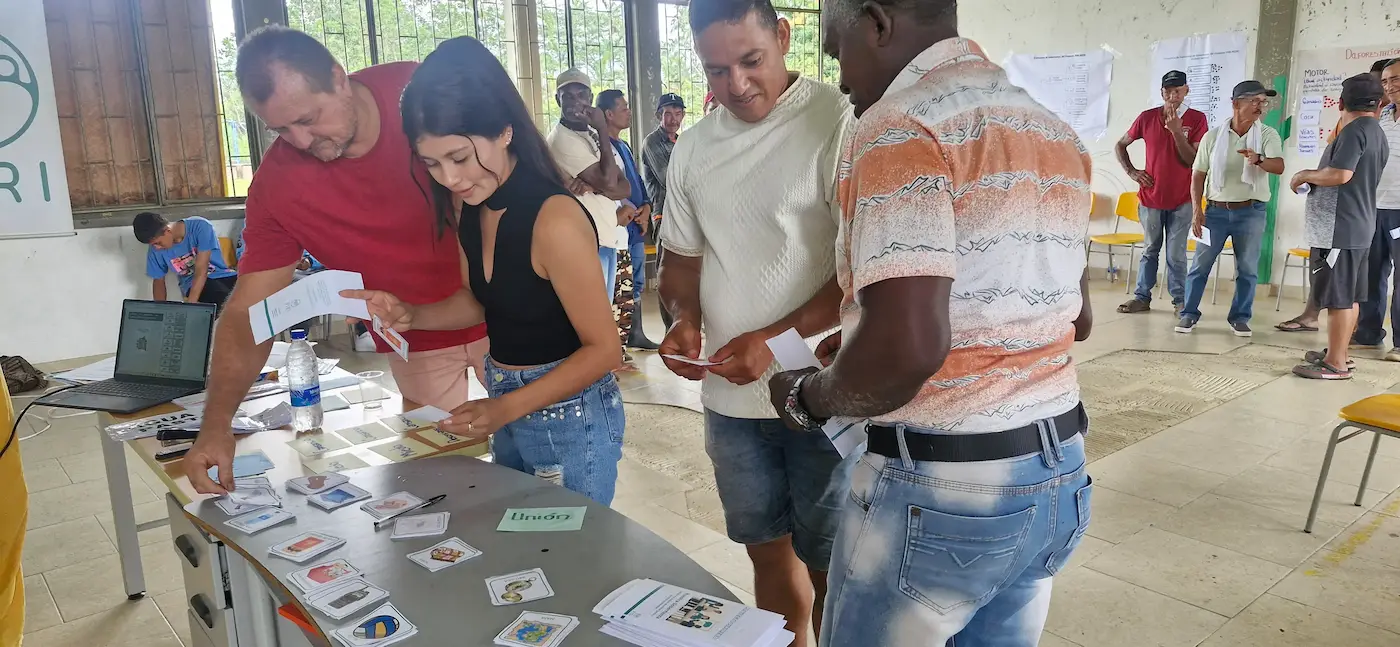
The activity concluded by explaining the significance of objects within a decision-making process and the importance of teamwork, active listening, leadership, and participation in a governance process within the framework of the PIRI REDD project. The exercise functioned as a governance simulator, showing how leadership emerges and how roles are distributed in high-pressure situations. This type of exercise strengthens the community capacity to face collective processes and legitimize the future governance structure.
Takeaway
Together, participants outlined what a general project committee should include, such as a president, secretary, fiscal role, and representatives across key community groups and productive activities. The next step is to move from design to elections, so the committee can begin working with clear responsibilities and community oversight.