This workshop was built around three stations to jointly analyze how current productive systems work in the project zone and what it really costs to run them. The goal was to build a shared understanding of profitability and constraints, and to generate inputs that can later support a benefit-sharing mechanism between the developer and the community. The first and main station was livestock (Ganadería), followed by sessions on cacao farming and aquaculture. Participants rotated through the three stations and had open conversations about farm management, risks, and costs.
Station 1 – Livestock
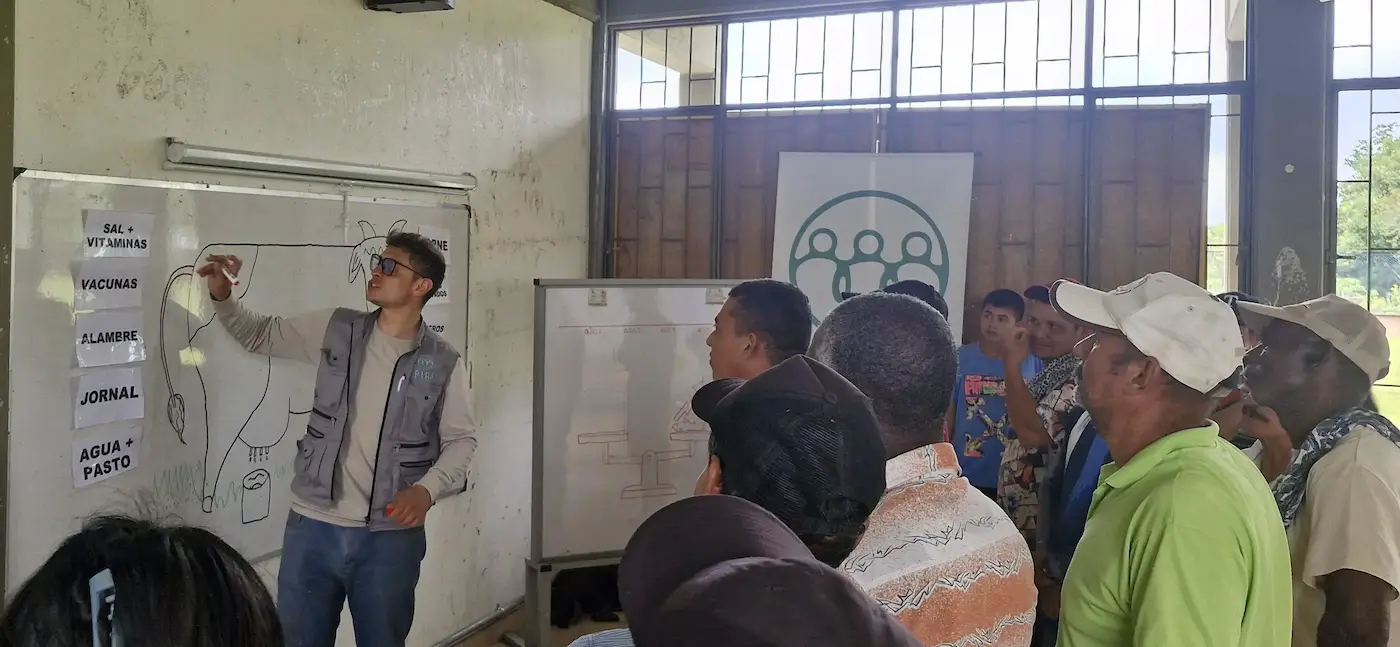
The objective of this station was to understand real profitability within livestock farming by answering practical questions like the cost per kilogram of meat and the total investment needed to raise an animal to full weight over an estimated 1–2 year cycle. With a drawing of a cow on the board, different inputs and costs were mapped and compared. This exercise confirmed that many farmers are not fully aware of the total investment required in livestock production.
The community identified priorities that will create significant impact:
- Evaluate and measure pastures
- Improve water supply in paddocks
- Include regular weight and biomass measurements
Ganadería is the Spanish word for animal husbandry, the branch of agriculture concerned with animals that are raised for meat, fibre, milk or other products. It includes day-to-day care, management, production, nutrition, selective breeding, and the raising of livestock.
Station 2 - Cacao
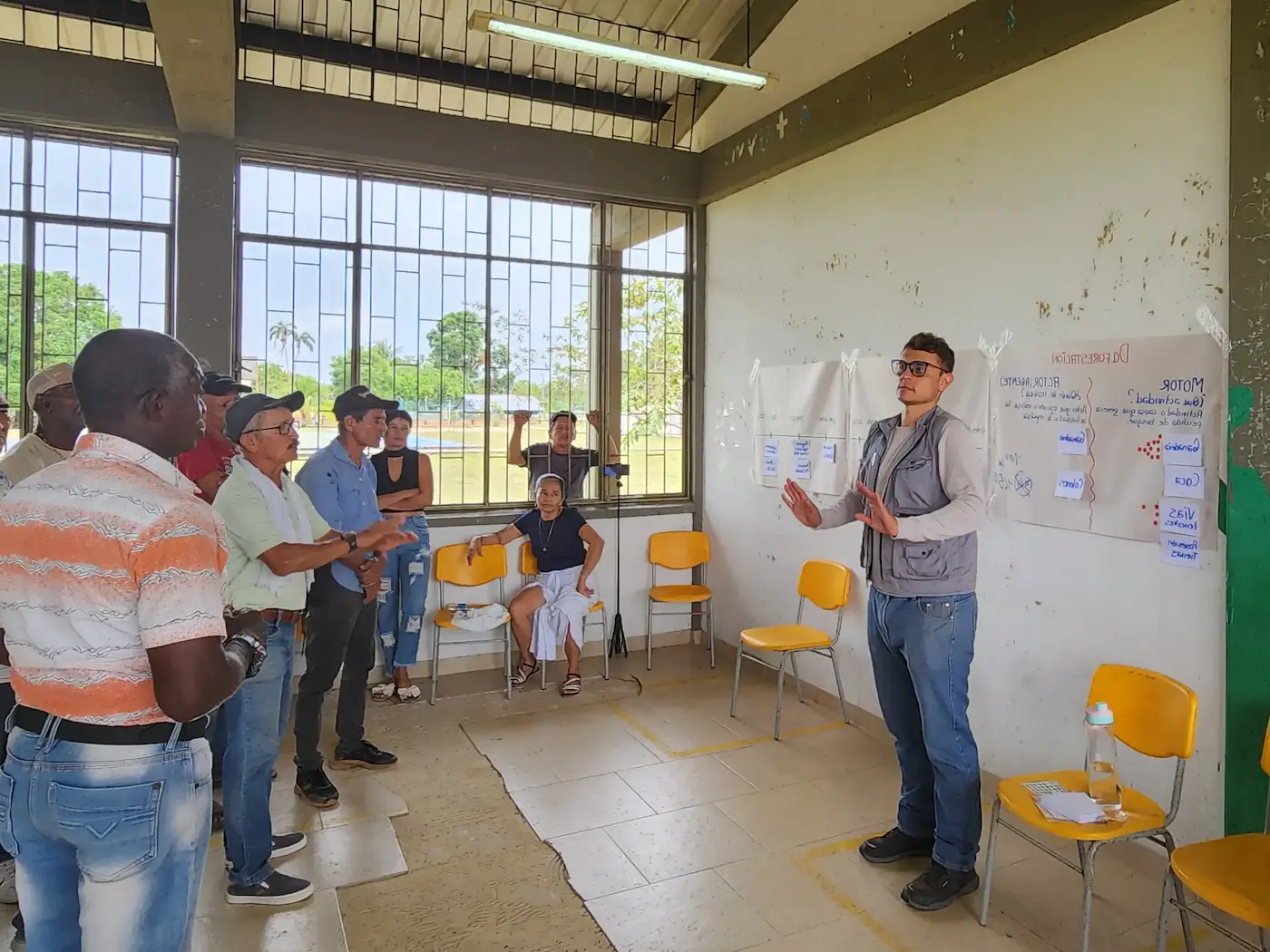
Similar to the first station, understanding what real profitability looks like was the main goal, but here we also focused on the early development phase and establishment of plants. In collaboration with the community, a timeline was mapped and constraints and cost drivers were identified.
Initially, we aimed to compare the national yield benchmark for cacao (450-1.000 kg/ha/year) with the participants’ yield performance but it became clear that farmers lacked the management capacity to even come to that number. There is also a lack of historical records and clear yield indicators, which makes it difficult to measure profitability and make informed investment decisions.
Station 3 - Aquaculture
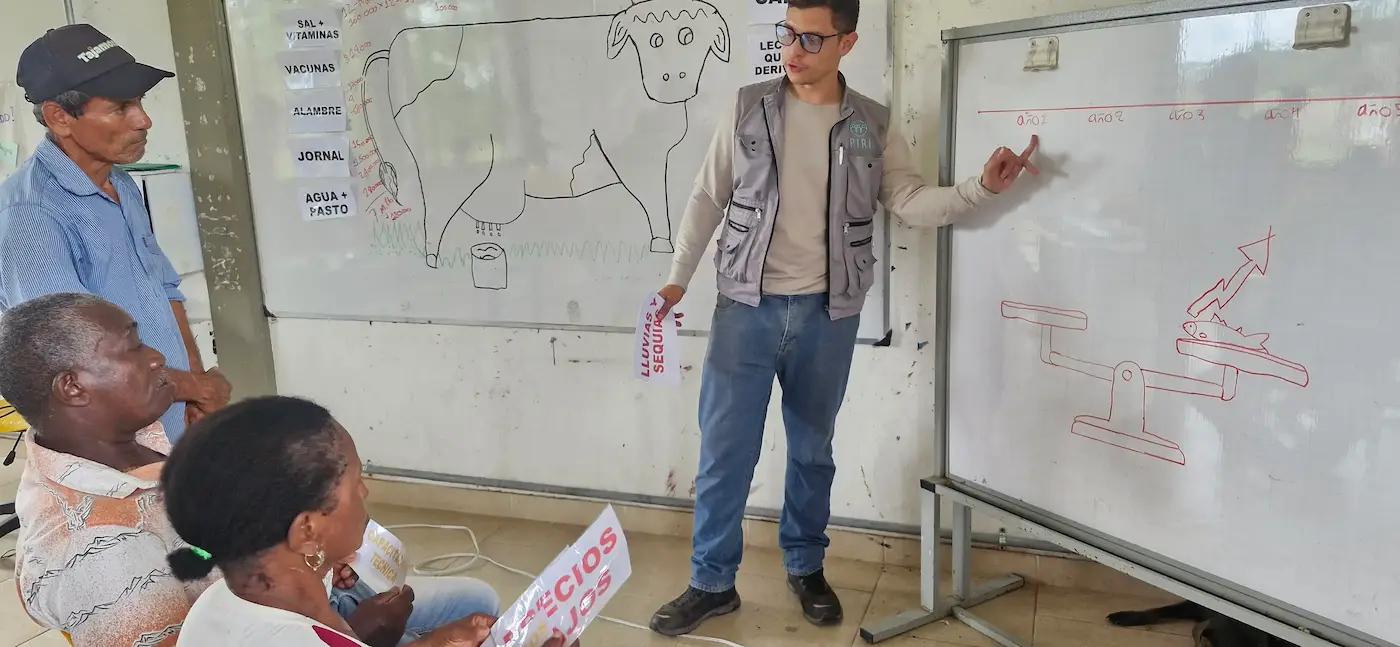
There are currently three existing fish cages in the community. Because we believe this could be a strong opportunity for the community to diversify away from cattle ranching and reduce pressure on forests, we included this station. We explored aquaculture as a business opportunity that can require a higher initial investment, but has shorter production cycles that can lead to faster returns. It can also support local protein production and food security, aligned with SDG 2 (Zero Hunger). Again, it became clear that there is a lack of know-how around stocking density, feeding rates, biomass evaluation, and critical control points.
Takeaway
Three transversal gaps were identified: technical management, cost control, and commercialization. Our future workshops, aligned with our benefit-sharing strategy, will focus on narrowing these gaps and building with the community toward a stronger understanding of productive systems. Ultimately, this will support improved livelihoods in the project zone.